
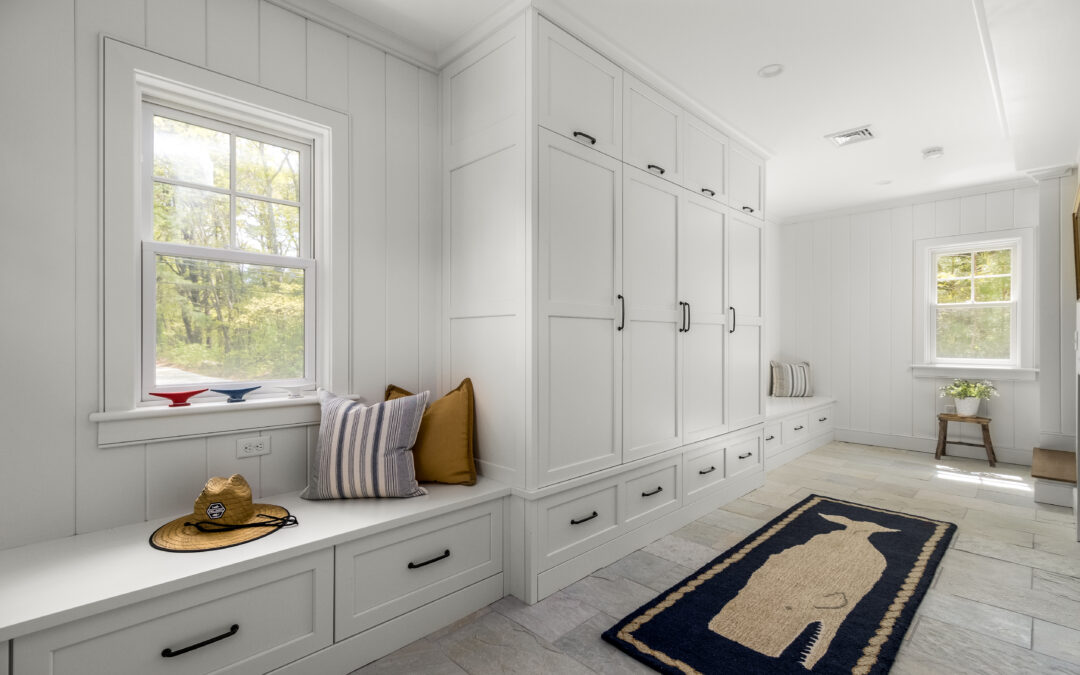
You wipe your feet, drop your bag, kick off your boots, and suddenly there it is. That pile of coats, backpacks, wet umbrellas, and soccer cleats that seems to multiply on its own. Sound familiar?
For most homeowners, the entryway is the first place order breaks down. But here’s the thing: it doesn’t have to be. When designed well, your mudroom is the hardest working room in your home… and one of the most overlooked.
So, What Exactly Is a Mudroom?
A mudroom is a dedicated transitional space between the outside world and the rest of your home. Think of it as a buffer zone… a place where the chaos of daily life (and the elements) gets contained before it can spread through your living spaces.
Traditionally, mudrooms were utilitarian back-entry spaces in farmhouses and older New England homes. Today, they’ve evolved into highly functional, beautifully designed rooms that can be tailored to fit any lifestyle, family size, or home layout. They don’t have to be large, either. A well-planned mudroom can fit into a hallway, a corner of a garage entry, or a dedicated room off the back door.

The #1 Job of a Mudroom: Containment
Let’s be honest… the real magic of a mudroom is what it keeps out of the rest of your house.
Rain, mud, sand, dirt, pet paws, sports gear, backpacks, and wet snow boots all have one thing in common: they don’t belong in your kitchen or living room. A mudroom creates a physical stop between the outside and your interior spaces, giving everyone in the household a designated place to transition.
For families living in New England, this is especially relevant. Beach towels, sandy flip-flops, fishing gear, wet dogs fresh from the water… coastal living is wonderful, but it comes with its own unique set of messes. A mudroom designed with your lifestyle in mind means all of that stays contained right where it belongs, making cleanup dramatically easier.
That’s exactly why your mudroom is the hardest working room in your home, but only if it’s designed so that using it actually feels natural. If the hooks, cubbies, and storage are intuitive and accessible, people will use them. If they’re not, things end up on the floor anyway.

A Place for Everything: Storage That Actually Works
The best mudrooms go beyond a single row of hooks. Thoughtful storage design means every member of the family has a spot that’s truly their own.
Cubbies and lockers are one of the most popular choices for families with kids. Each child gets their own dedicated space for backpacks, sports equipment, and shoes. No more hunting for a missing cleat on a Saturday morning… everything has a home. Open cubbies keep things visible and easy to grab, while locker-style cabinetry with doors keeps the visual clutter hidden when guests come over.
Built-in bench seating is another game-changer. A bench with storage underneath is one of the most functional pieces of furniture you can have near an entry. Sit down to pull off your boots, and store them right underneath. Some families use the bench storage for seasonal items like scarves and gloves, keeping them accessible but off the floor.
Hooks and hanging systems should be planned at multiple heights… adult-level hooks for coats and bags, lower hooks that kids can actually reach on their own. This small detail alone can significantly reduce the “dropped everything on the floor” problem.
Shelving for sports and gear takes things a step further for active households. Dedicated spots for helmets, rackets, cleats, and bags mean sports gear is always where you expect it and not scattered across your garage or mudroom floor.
Finally, don’t overlook a place to drop the everyday essentials: keys, mail, sunglasses, and wallets. A small built-in shelf or tray area near the door means nothing gets lost in the shuffle.

Keeping It Clean: Materials and Flooring That Can Handle Anything
A mudroom has to be tough. The flooring and surfaces need to stand up to water, mud, salt, sand, and heavy foot traffic without looking worn-out after a single season.
Tile is often the top choice for mudroom flooring… it’s durable, waterproof, and easy to mop clean. Porcelain and ceramic tiles both hold up well, and darker grout colors are a smart practical choice. Some homeowners opt for slate or natural stone for a more elevated look that still handles the wear. Luxury vinyl plank is another great option, especially for spaces that connect to a laundry room, since it’s softer underfoot and completely water-resistant.
For cabinetry and built-ins, a painted finish tends to be easier to wipe clean than stained wood. And if you’re incorporating a bench, look for seat cushions with removable, washable covers… a small detail that pays off quickly.
Does a Mudroom Add Value to Your Home?
The short answer: yes. And in more ways than one.
From a resale standpoint, dedicated storage and organization spaces are consistently ranked among the features buyers find most appealing. A custom mudroom signals that a home has been thoughtfully designed for real life, not just for show. In markets like Cape Cod, where buyers are often purchasing larger family homes or vacation properties, practical spaces like mudrooms can be a meaningful differentiator.
Beyond resale value, there’s the daily quality-of-life value that’s harder to put a number on. Less mess tracked through the house. Less time spent looking for lost items. Less frustration at the end of a long day. It’s a reminder that the hardest working room in your home pays for itself in the small ways it makes daily life better, every single day.
Ready to Design Your Mudroom?
Whether you’re building new, remodeling, or simply rethinking an underused corner of your home, a custom mudroom is one of the smartest investments you can make. At Lewis & Weldon, we design and build custom cabinetry and built-ins that are tailored to the way your family actually lives… from the hooks to the bench to the last cubby.
If you’re ready to finally give that entryway the attention it deserves, we’d love to talk.
Recent Comments