
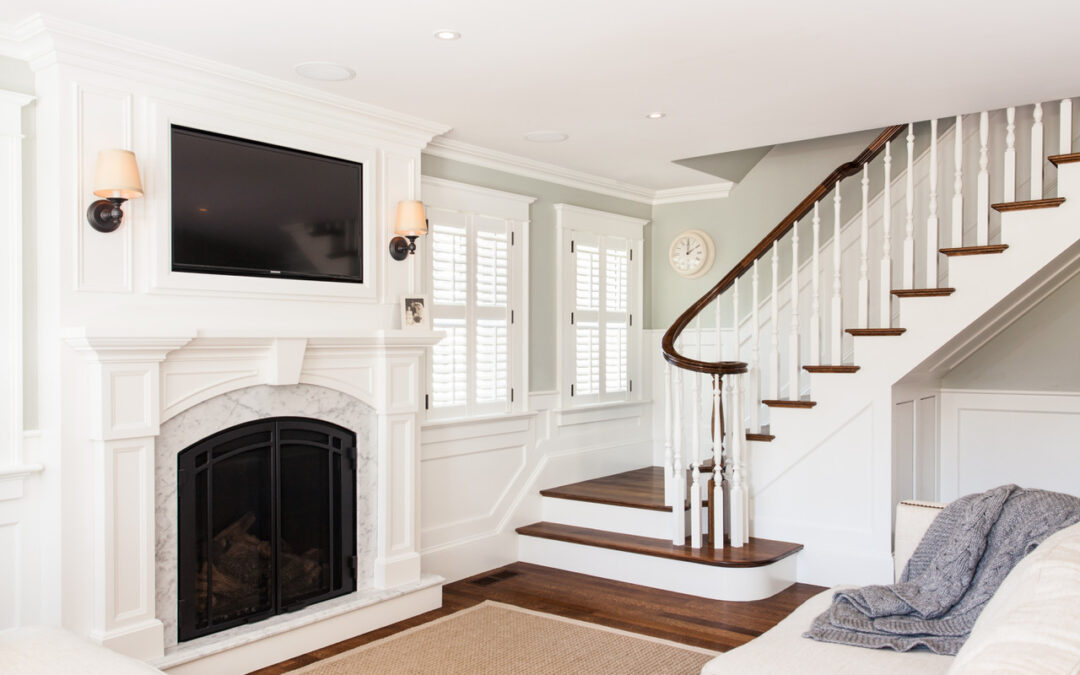
The fireplace has long been the heart of the home… a gathering place that brings warmth, ambiance, and timeless beauty to any living space. In this complete guide to custom fireplace design, we’ll walk you through everything you need to know. As custom cabinetry makers, we’ve had the privilege of designing and building countless fireplace surrounds and built-ins that transform ordinary walls into stunning architectural statements. Whether you’re building new or renovating, understanding the anatomy and possibilities of custom fireplace design will help you create a feature that perfectly reflects your style.
Understanding Fireplace Anatomy
Before diving into design possibilities, let’s break down the key components that make up a complete fireplace installation:
The Firebox and Insert
At the core of any fireplace is the firebox, the chamber where the fire actually burns. This can be a traditional masonry firebox, a factory-built metal firebox, or a modern gas or electric insert. The insert is what generates the heat and flame, and your choice here will influence the design of everything around it.
The Hearth
The hearth is the floor area directly in front of and sometimes extending into the firebox. Traditionally made from stone, brick, or tile, the hearth serves both a functional purpose (protecting flooring from sparks and embers) and an aesthetic one. In custom designs, we often coordinate hearth materials with the overall surround for a cohesive look.
The Surround
The surround refers to the decorative framework that encompasses the firebox opening. This is where custom cabinetry truly shines. Surrounds can be simple or elaborate, modern or traditional, and are typically constructed from wood, stone, tile, or a combination of materials. As cabinetmakers, we craft surrounds that integrate seamlessly with the architectural style of your home.
Pilasters, Jambs, and Legs
The vertical elements flanking the firebox opening go by several names. Pilasters are decorative columns or vertical trim pieces that add classical architectural detail. Jambs or legs are the vertical sides of the fireplace opening itself. In custom work, these elements can be simple and clean-lined for modern spaces, or richly detailed with fluting, raised panels, or carved details for traditional homes.
The Mantel
Perhaps the most recognized fireplace element, the mantel (or mantelshelf) is the horizontal shelf that crowns the fireplace opening. This practical display space becomes a focal point for family photos, seasonal décor, and artwork. Custom mantels can be anything from a simple floating shelf to an elaborately carved beam, sized and styled to suit your space perfectly.
The Overmantel
The overmantel is the decorative area above the mantel shelf, extending up the wall. This space offers tremendous design opportunity… it might feature paneling, mirrors, artwork, a television recess, or additional shelving. In custom designs, we often incorporate raised panel details, shiplap, board and batten, or other architectural elements that tie into the room’s overall design.
Corbels and Brackets
Corbels are decorative brackets that appear to support the mantel shelf, adding visual weight and traditional charm. While they may not always be structurally necessary, corbels contribute significant architectural character. They can be simple or ornate, sized proportionally to your mantel and overall design.
Custom Fireplace Styles and Configurations

The Classic Fireplace with Flanking Built-Ins
One of our most requested designs features built-in cabinetry on either side of the fireplace. This configuration maximizes both storage and visual impact, creating a complete wall of custom millwork. Floor-to-ceiling cabinets or bookcases flank the fireplace surround, providing space for books, display items, media components, or enclosed storage. This approach works beautifully in family rooms, living rooms, and home libraries, creating symmetry and making the fireplace feel like an integral part of the architecture rather than an afterthought.
We typically design these with careful attention to proportion… the fireplace surround should be substantial enough to hold its own as the focal point, while the flanking units complement without competing. Details like matching crown molding, consistent door styles, and coordinated hardware tie everything together.

The Modern Minimalist Fireplace
Contemporary homes call for cleaner lines and simplified details. Modern fireplace designs might feature a sleek stone surround with a simple floating mantel, or even eliminate the mantel entirely for a streamlined look. Built-ins in modern settings often incorporate open shelving with hidden LED lighting, asymmetrical arrangements, or contrasting materials like mixing wood tones with metal accents.
The key to successful modern fireplace design is restraint and attention to proportion. Without ornamental details to hide imperfections, every joint and measurement must be precise.
The Two-Story Statement Fireplace
In great rooms or spaces with two-story ceilings, the fireplace wall becomes a canvas for dramatic architectural impact. We might design floor-to-ceiling stone or millwork, incorporate windows or niches into the design, or create a gallery wall effect around the fireplace. These large-scale projects require careful planning to maintain proper proportions… what looks right in a standard 8-foot room won’t translate to a 20-foot wall.

The Media-Integrated Fireplace
Today’s reality includes accommodating televisions in our most-used living spaces. While purists debate whether TVs belong above mantels, we’ve developed solutions that integrate media thoughtfully. This might include a recessed panel above the mantel that houses the TV flush with the wall, built-in conduits for clean cable management, or side cabinets designed to house media components and gaming systems. Some designs place the TV to the side rather than above, maintaining the fireplace as the true focal point while acknowledging modern lifestyle needs.
Material Choices for Custom Fireplace Design
Wood Species and Finishes
As cabinetmakers, wood is our primary medium. The species you choose dramatically impacts the overall aesthetic:
- Maple and Poplar paint beautifully for traditional white or colored finishes
- Oak offers pronounced grain for rustic or craftsman styles
- Cherry and Walnut provide rich, warm tones for formal traditional spaces
- Alder accepts stains evenly for custom color matching
Finishes range from natural clear coats that showcase wood grain to painted finishes in any color imaginable. Distressed or glazed finishes add age and character to new work.


Stone and Tile
Pairing custom millwork with stone or tile creates texture and contrast. A stone surround with a wooden mantel and built-ins combines the organic warmth of natural materials with the craftsmanship of fine woodworking. Popular choices include limestone, marble, granite, stacked stone, and decorative tile.
Mixed Materials
The most dynamic designs often combine multiple materials… perhaps a stone surround with wood built-ins and metal accents, or shiplap in the overmantel area with wood trim and stone hearth. The key is maintaining a cohesive color palette and proportional balance.
Design Considerations for Your Custom Fireplace
Proportion and Scale
The most common mistake in fireplace design is getting proportions wrong. A massive stone surround in a small room feels overwhelming; a thin, undersized mantel in a great room disappears. We carefully consider ceiling height, room size, and furniture scale when designing each element.
A good rule of thumb: the mantel should be roughly 4-6 inches wider than the firebox opening on each side, and the overall surround should occupy roughly one-third to one-half of the wall width.
Clearances and Safety
All fireplace designs must meet local building codes regarding clearances from combustible materials. These requirements vary based on your firebox or insert type, but we always work closely with your fireplace installer and local inspectors to ensure safety without compromising design.
Functional Storage vs. Display
Built-ins around fireplaces should balance beauty and practicality. Consider what you need to store… books, media equipment, board games, blankets and what you want to display. A mix of closed cabinets for concealing clutter and open shelving or glass-front cabinets for display usually works best.
Electrical and Technology Integration
Plan ahead for electrical outlets, lighting, and cable management. Built-in lighting can highlight display items and create ambiance. Outlets inside cabinets accommodate lamps and devices while keeping cords hidden. If incorporating a TV, plan for proper wiring and ventilation.
The Custom Cabinetry Advantage
As custom cabinetry makers, we bring precision, craftsmanship, and flexibility that off-the-shelf mantels and prefab surrounds simply cannot match. Every fireplace we build is designed specifically for your space, your style, and your needs. We can match existing trim and millwork, accommodate unusual dimensions or challenging layouts, incorporate special features, and create truly one-of-a-kind pieces that become lasting focal points in your home.
Whether you envision a grand traditional fireplace with floor-to-ceiling built-ins, a sleek modern statement, or something uniquely yours, custom cabinetry allows us to bring that vision to life with attention to detail and quality that stands the test of time.
Ready to Transform Your Space?
A custom fireplace isn’t just about warmth, it’s about creating a gathering place that reflects your style and enhances your daily life. From understanding the anatomy of fireplace components to exploring design possibilities with built-ins and custom millwork, we hope this guide has inspired your vision for what’s possible.
If you’re considering a custom fireplace project, we’d love to discuss your ideas and show you how our craftsmanship can transform your space into something truly special.
Recent Comments