
As we move into 2026, home design is embracing a beautiful evolution that balances warmth with the clean aesthetics we’ve come to love. You might have heard whispers that the “all-white era” is over, but that’s not quite true. In fact, Pantone’s 2026 Color of the Year is “Cloud Dancer,” a soft, warm white that proves white isn’t going anywhere… it’s simply being reimagined. The difference now is that we’re layering these crisp, clean foundations with warmer tones, richer textures, and more personal touches. The result? Homes that feel both current and collected, polished yet lived-in. Today, we’re walking you through the 2026 interior design trends that are shaping spaces this year, including the most important one: designing a home that’s authentically yours.
1. The Return of Natural Wood & Deeper Stains
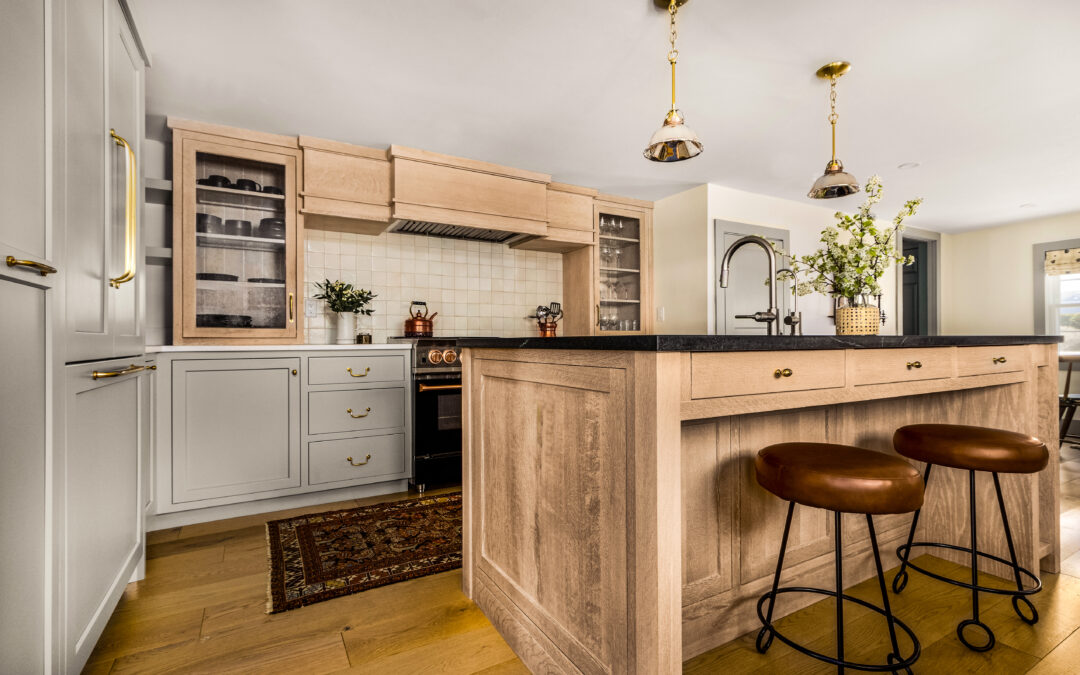
After years of light, bleached woods and painted cabinetry dominating our feeds, there’s a noticeable shift back toward celebrating wood in its more natural, rich-toned glory. We’re seeing walnut, oak with deep honey or espresso stains, and wood with visible, dramatic grain patterns taking center stage. This isn’t about making spaces feel dark or heavy… instead, it’s about introducing warmth and a grounding, organic element that connects us back to nature.
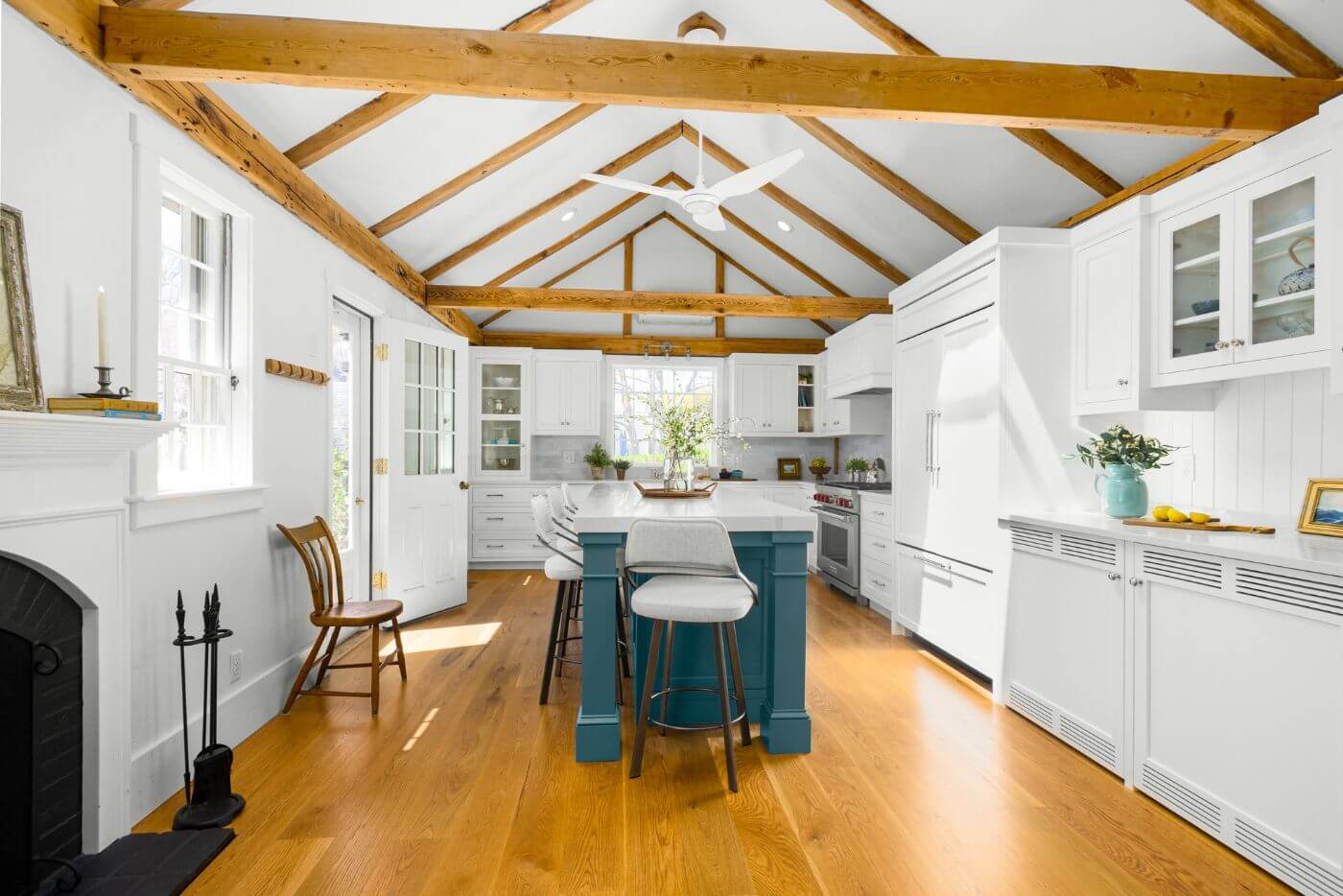
Consider incorporating this trend through hardwood flooring with character, kitchen cabinetry in a warm walnut tone, exposed ceiling beams, or even a statement dining table that becomes the heart of your home. The key is to let the wood be the star rather than trying to disguise or downplay its natural beauty.

2. Layering & Mixed Materials
Gone are the days when everything in a room had to match perfectly. In 2026, the most interesting spaces are those that thoughtfully combine different materials and finishes to create depth and visual interest. Think wood paired with brushed brass and natural stone, or matte black fixtures alongside polished marble and textured plaster walls.
This layered approach feels collected over time rather than purchased all at once from a single showroom. The secret to pulling this off without creating visual chaos is finding a common thread… whether that’s a consistent color palette, a repeated finish, or an overall design style that ties everything together. When done well, mixed materials make a space feel rich, curated, and far more personal than a matchy-matchy approach ever could.

3. Earthy Neutrals
While we’re certainly not abandoning white walls, especially with Cloud Dancer leading the charge, we are seeing a beautiful expansion of the neutral palette. Earthy, warmer neutrals are having a major moment: think soft taupes, clay-inspired terracottas, warm putty tones, muted sage greens, and creamy beiges with depth. These colors work beautifully alongside crisp whites, creating a layered, sophisticated look that feels both calming and grounded.
Living rooms and bedrooms are perfect candidates for these warmer tones, while you might reserve your brightest whites for trim, ceilings, and spaces where you want maximum light reflection. The beauty of this trend is that these colors photograph as neutrals but offer so much more warmth and personality in person than a stark gray or cool white ever could.

4. Statement Stone
Stone has always had a place in home design, but in 2026, we’re seeing it used in bolder, more dramatic ways. Rather than playing it safe with simple countertops, homeowners are letting stone shine as a true statement piece.
This might mean a stunning waterfall island where the stone cascades down the sides, a dramatic veined marble backsplash that reaches the ceiling, a zellige or natural stone accent wall in a powder room, or even stone flooring in an entryway that sets the tone for the entire home.
Popular choices include quartzite with dramatic veining, soapstone with its soft matte finish, and marbles that feature movement and character. The key is choosing one area to let your stone really make an impact rather than spreading it too thin throughout the space.

5. Seamless Integration & Hidden Storage
There’s a growing desire for spaces that feel calm, uncluttered, and visually quiet and that means making the functional elements of our homes disappear. In kitchens especially, we’re seeing a surge in panel-ready appliances that blend seamlessly with cabinetry, push-to-open drawers and cabinets that eliminate the need for hardware, integrated refrigerators and dishwashers that maintain clean sightlines, and pocket doors that tuck away when not needed. This trend extends beyond the kitchen too: think floating vanities with hidden storage, built-in shelving with concealed compartments, and furniture pieces designed to hide everyday clutter. The goal isn’t sterile minimalism but rather creating a serene backdrop that allows your intentional design choices, and your life, to take center stage.
Of course, achieving this seamless look requires thoughtful planning behind the scenes. All of that “hidden” functionality (the pull-out spice racks, deep drawer organizers, vertical dividers, and specialized storage solutions) is what makes a kitchen truly work. If you’re curious about the essential cabinets and storage features that create a functional kitchen beneath that clean, integrated exterior, we dive deep into all of those details in our post on Essential Cabinets for a Functional Kitchen. Because the most beautiful kitchens aren’t just about what you see… they’re about how effortlessly everything works behind closed doors.

6. Statement Lighting as Art
Lighting has evolved from a purely functional consideration to one of the most impactful design elements in a space. In 2026, we’re treating light fixtures as sculptural art pieces that command attention and anchor a room’s design. An oversized pendant over a dining table, a dramatic chandelier in an entryway, unexpected wall sconces flanking a bed or framing a mirror, or clustered pendants at varying heights over a kitchen island… these are the moves that elevate a space from nice to unforgettable.
The beauty of investing in statement lighting is that it’s often easier and less expensive than a renovation, yet it can completely transform how a room feels. Don’t be afraid to go bolder than you think you should; lighting is one area where making a statement almost always pays off.
7. The Most Important Trend: Designing for YOU
Here’s the truth that I want you to hold onto as you think about updating your home in 2026: every trend we’ve discussed is simply a tool in your design toolkit, not a mandate you must follow.
The most significant shift happening in home design this year isn’t about a specific color or material… it’s about homeowners finally permitting themselves to design spaces that reflect who they actually are, rather than what they think will photograph well or appeal to future buyers. This means confidently mixing your grandmother’s antique dresser with modern lighting, displaying collections that bring you joy even if they’re not “on trend,” embracing the beautiful imperfection of a lived-in space, choosing that bold paint color you’ve always loved instead of playing it safe, and designing around how your family actually lives rather than how you think you should live.
The homes that feel most current and compelling aren’t necessarily the ones following every single trend… they’re the ones that feel intentional, personal, and authentic. So yes, consider incorporating those warm wood tones if they speak to you. Layer in that statement stone if it makes your heart sing. But also honor the pieces you already own and love, the colors that make you feel at home, and the quirks that make your space uniquely yours. When it comes to 2026 interior design trends, the most important thing to remember is this: trends come and go, but a home that truly reflects the people who live in it never goes out of style.
Looking ahead, 2026 is shaping up to be a year where warmth, texture, and authenticity take center stage… all while maintaining the clean, bright foundations we’ve come to love. Whether you’re planning a full renovation or simply looking to refresh a few spaces, I hope these trends inspire you to create a home that feels both current and timeless.
Which of these trends are you most excited to incorporate? I’d love to hear what resonates with you!
Recent Comments